
What scale and a mixed scope do to the record
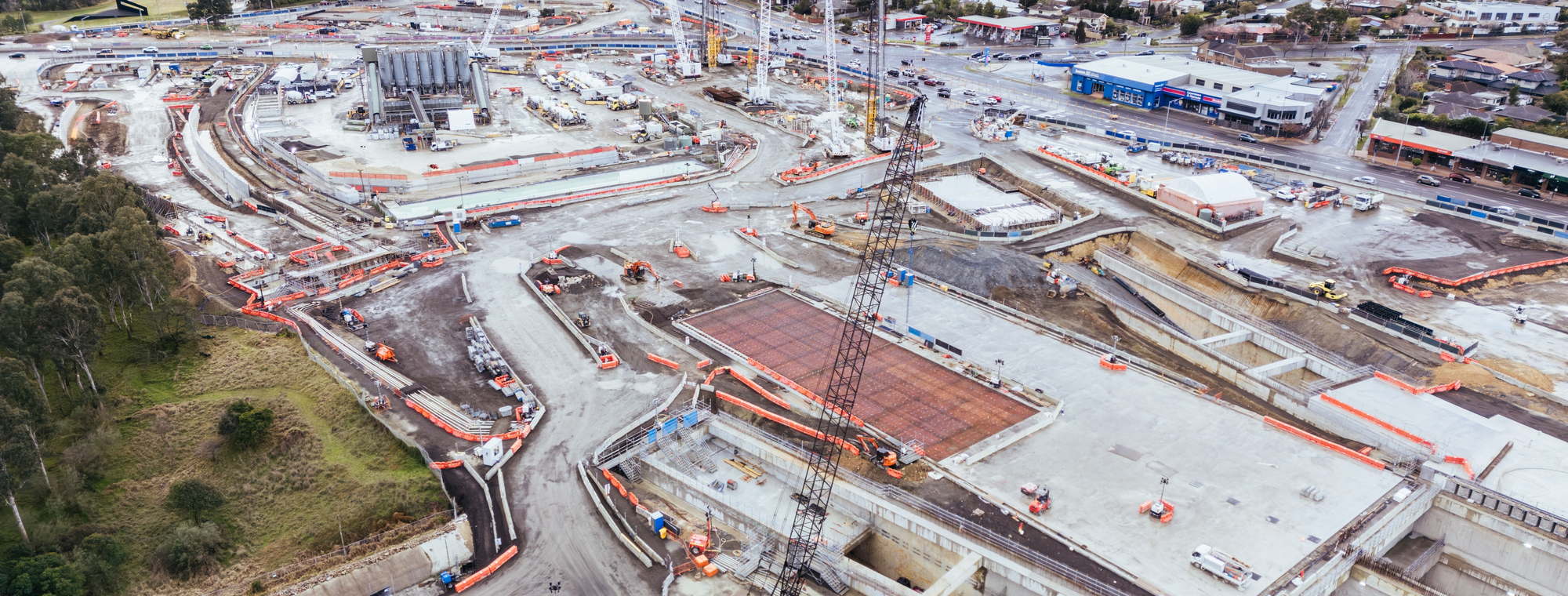
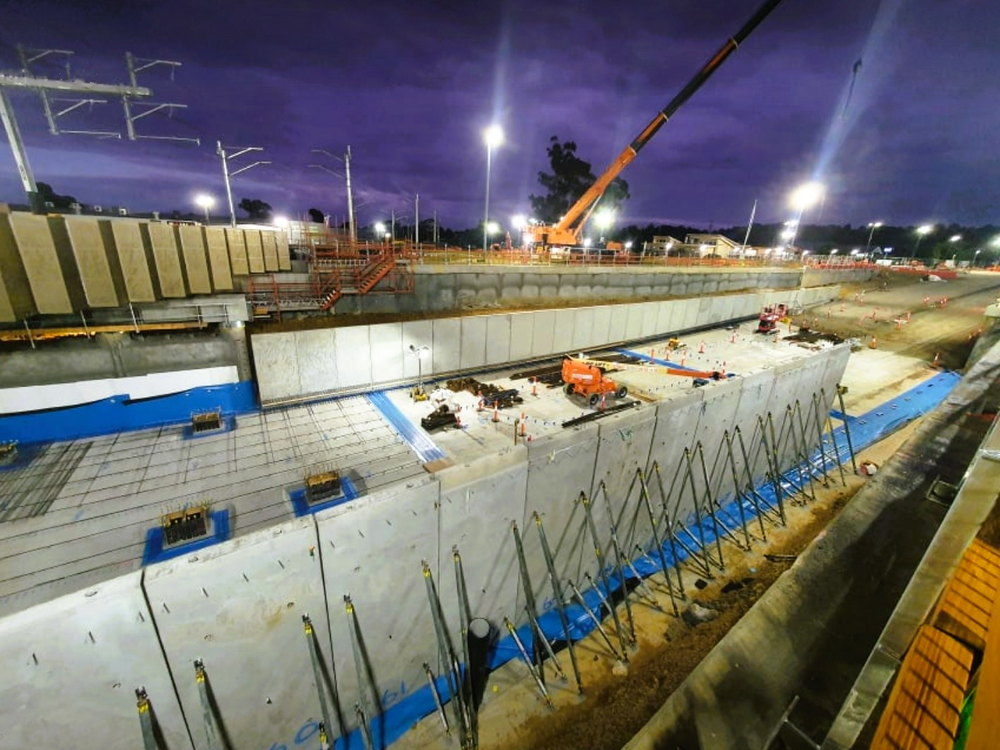
A major project is not a trade. Bridges, rail and civil sit under one contract, and each discipline arrives with the regime it already works to.
There is no hierarchy that suits all of them. A work breakdown that reads correctly to the bridge team is the wrong shape for the rail team, and a job carrying several disciplines at once has no single sensible answer. Deciding one anyway is how elements end up filed where nobody would look for them.
FOC Capture does not impose one. Every element is a peer, and the ITP determines the stage of every element. Nothing has to be filed into a tree before it can be tracked, which is what makes a mixed scope tractable at all.
None of that is hard on its own. It gets hard when the head contractor wants one conformance picture across all of it, and when the answer still has to hold up after the package team has demobilised.
Scale is the other half. Eight thousand elements is not eight thousand rows. It is eight thousand records that each have to be findable years later, by someone who was not there.
A hold point is a point you nominate on the ITP, not a fixed idea the software brought with it. Each discipline nominates its own, and which of them are open across the whole job is one query.
What gets recorded against the element
-
No hierarchyElements are first-class. There is no work breakdown structure to agree, no parent tree to file anything into, and no shape a discipline has to accept before it can record anything. The ITP determines the stage of every element.
-
ITPs per disciplineEach discipline keeps the regime it works to. A prebuilt ITP to start from, the required ITRs modified to suit, and anything else built in the form builder or mapped from the form the crew already uses. The Client's requirements or your own QMP set what has to be inspected, not the software.
-
One registerStructures, rail, drainage and precast elements in the same register, filtered by any tag rather than split across four systems.
-
Hold accountabilityA bypassed hold point cannot be backdated. If work went past a hold without its sign-off, the record says so and says when, whichever discipline it belongs to.
-
Project email addressThe project has its own email address. A subcontractor can gain approval to it, or send evidence to it, without a licence or an account. The quality manager triages what arrives against the project it belongs to.
-
Consistent identityEvery record named to the same container convention regardless of which discipline produced it. That is what lets the handover set reconcile.
-
Search at scaleOne element found among thousands, years later, without knowing which package it belonged to. A five thousand element job is a normal job.
-
Defects and NCRsA defect is raised from the field, triaged immediately in the admin portal, and added to a live-link job pack. The same path on every discipline, against the element it belongs to.
-
HandoverEvery accepted record lands in the handover set as it is signed, package by package.
One register, every discipline
| Element | Discipline | Package | Record | Hold | ITRs | Status |
|---|---|---|---|---|---|---|
| PIER-04 | Structures | Bridge 2 | PR-0221 | Signed | 9 of 9 | Conformed |
| PIER-05 | Structures | Bridge 2 | PR-0221 | Bypassed 18 Jul | 7 of 9 | NCR open |
| TS-0142 | Transmission | Run C | ET-0206 | Signed | 8 of 8 | Conformed |
| L-0214 | Civil | Ch 1350 to 1500 | TR-0189 | Signed | 6 of 6 | Conformed |
| SLAB-118 | Rail | Track slab | PR-0224 | Open | 0 of 7 | At hold point |
| PC-1045 | Precast | Bridge 2 | PR-0118 | Bypassed 14 Mar | 4 of 6 | NCR open |
What the programme view cannot answer
Your project management platform is doing more work on a job this size, and it is doing it well. Packages, interfaces, the critical path. Nobody is suggesting a register replaces any of that.
The gap opens underneath it. Each discipline brought its own way of holding evidence, and the roll-up the head contractor wants is a roll-up of four different record sets. It gets done by hand, in a spreadsheet, once a month, and it is out of date the day it is issued. Underneath every one of those questions is a single element: which hold is open on PIER-05, and what closes it.
This is not work the platform was meant to carry. A job this size runs several programmes, one for each discipline, and every one of them is a schedule. Handover asks for a single conformance picture, and it has to come from the elements themselves.
With the element as the unit
- Every open hold point across four disciplines, on one screen
- PIER-05's bypassed hold, and the day it happened
- One element found years later, without knowing its package
- Conformance rolled up by package, from the crews' own records
- A handover set that reconciles, because it was named the same way throughout
With the task as the unit
- A separate QA system per discipline, reconciled by hand
- "Bridge 2, 74% complete" as an answer to a conformance question
- A monthly roll-up that is out of date the day it is issued
- A hold signed off last Tuesday, typed in this morning
- Records nobody can find once the package team demobilises
The handover set the contract already asked for
A live handover set is not a nice-to-have. Most contracts of any size already require the record to be built up as the work proceeds, rather than assembled once the work is done. Many do not work that way, and at this scale it is the whole difficulty. Four disciplines collecting evidence four ways produce a handover that has to be reconciled before it can be reviewed. FOC Capture tracks every record against its element and its tags from the beginning, so what you hand over is comprehensive rather than reassembled. It is added to the set as it is signed, and the tool compiles the Manufacturer's Data Report the same way where the contract asks for one. Either way it takes that work off the end of the job.
The same requirements expect a record to still be findable long afterwards, by someone who was not there when it was made. The ISO 19650 container convention was written to answer that, by making the name itself say what the record is. FOC Capture names the records it generates, built from the job data rather than typed: the project, the document type, the author and the revision are all in the name. It does not rename anything you bring. Each discipline's drawings keep the numbers that discipline already uses: confirm one and the as-built honours it. Every discipline produces the same shape, which is the whole point of a convention. The identity never changes once it is assigned. Only the status and revision move, from work in progress through sign-off to the locked as-constructed record.
Container codes this work uses
GEN General. Whole-of-project registers and roll-upsSTR Structures: bridges, portals and piersERW Earthworks, on the civil packagesPAV Pavement, on the civil packagesIT Inspection and test records, whichever discipline produced themNC A non-conformance raised against an elementRP The conformance report compiled per packageAB As-built records for the handover set