
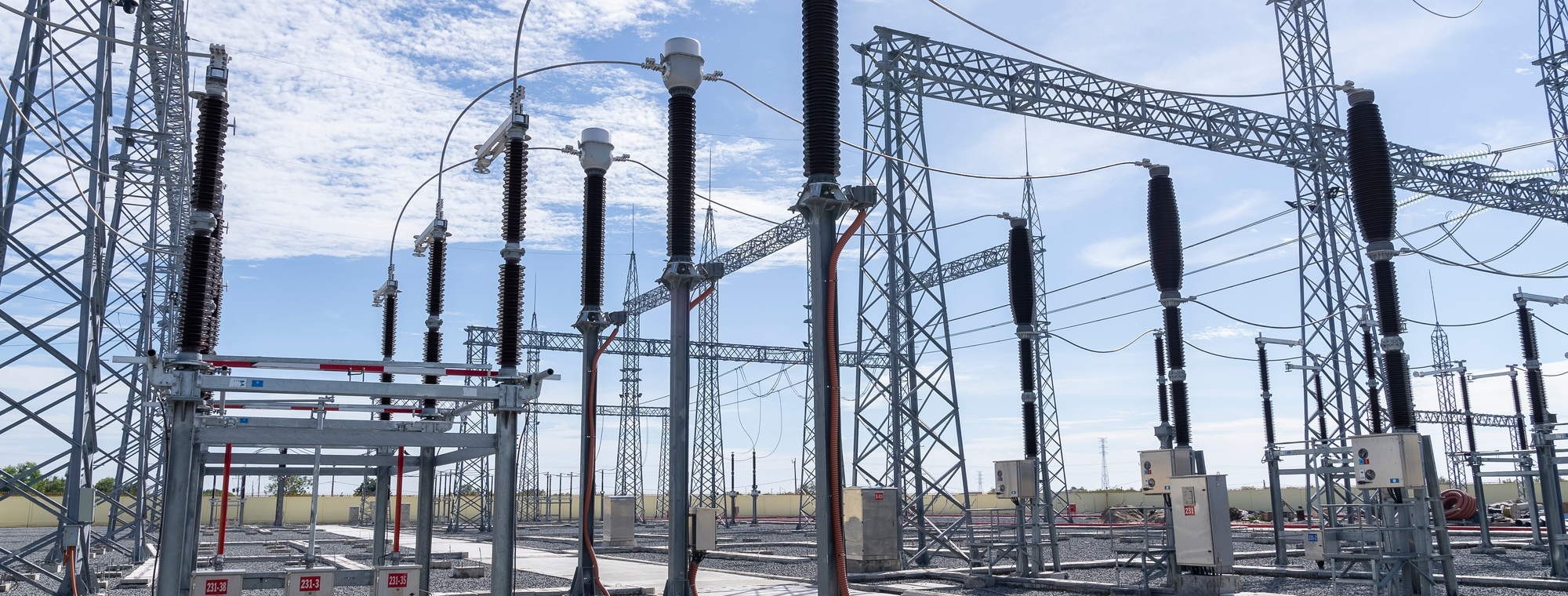
Why the record hangs off the structure
A transmission run is the same structure built hundreds of times, and no two of them are the same. The founding condition changes down the line, and it is inspected once, at the bottom of a hole, before anything covers it.
Different crews reach a structure weeks apart. Survey sets it out, civil builds the footing, erection stands it up, and the test crew comes back later again. Each of them leaves part of one record.
The structure number is the thread through all of it, and it is on the design before any software is involved. Everything captured at a structure is owned by that structure.
A hold point is a point you nominate on the ITP, not a fixed idea the software brought with it. Work does not move past one until it is signed, and the register shows which are open and which were bypassed.
What gets recorded against the structure
-
ITP and ITRsA prebuilt ITP to start from, with the required ITRs modified to suit the project. Any other ITR is built in the form builder or mapped from the form you already use. The Client's requirements or your own QMP set what has to be inspected, not the software.
-
FoundingThe founding condition inspected and accepted before anything goes in the hole. This is the hold point. It is the one argued about later, and it cannot be re-opened.
-
Hold accountabilityA bypassed hold point cannot be backdated. If a footing went in without its founding acceptance, the record says so and says when. On paper, in a spreadsheet or in a generic checklist module, the date is a field somebody types.
-
Test and survey resultsEarthing, torque and survey results held against the structure they were taken at, with the report reference beside the result. One report covers a run of structures and attaches to each of them.
-
One record, four crewsWhat set-out, civil, erection and test each capture lands against the same structure number, weeks apart and without a signal. The structure carries the whole sequence.
-
Defects and NCRsA defect is raised from the field, triaged immediately in the admin portal, and added to a live-link job pack. A non-conformance runs the same way, against the structure it belongs to. That path is the loop, not a status field that reads closed.
-
MDREvery accepted record lands in the Manufacturer's Data Report as it is signed.
One row per structure
| Structure | Footing | Earth test | Founding | ITRs | Status |
|---|---|---|---|---|---|
| TS-0140 | Pad | ET-0204 | Signed | 8 of 8 | As-built |
| TS-0141 | Pad | ET-0204 | Signed | 8 of 8 | As-built |
| TS-0142 | Pile | ET-0206 | Signed | 7 of 7 | Strung |
| TS-0143 | Pile | ET-0207 | Bypassed 06 Feb | 6 of 8 | NCR open |
| TS-0144 | Pad | ET-0207 | Signed | 8 of 8 | Erected |
| TS-0145 | Pad | Not tested | Open | 0 of 8 | At hold point |
What the programme view cannot answer
Your project management platform has a task called foundations. It has a start, a finish, a percent complete and a crew against it. For a programme that is the right level of detail. Someone has to know whether the run is tracking, and a bar on a chart answers that.
It is the wrong level once the run is spread over forty kilometres and the question is which structures. Which ones are still short an earth test. Which one was held at founding, what the re-inspection found, and who accepted it. What the as-built coordinates are at TS-0144 against design. A percentage cannot be interrogated. The evidence sits a level below the task, against a structure the task does not know by name.
The platform is good at what it does. In an industry like this one, quality needs to stand on its own. A dedicated, auditable record for every structure on the run, built on hold points rather than deadlines.
With the structure as the unit
- Structure TS-0143's founding hold, bypassed, and the day it happened
- Every structure still short an earth test
- The re-inspection that followed, and who accepted it
- As-built coordinates against design, structure by structure
- Which of TS-0145's ITRs are open, and what closes them
With the task as the unit
- "Foundations, 80% complete"
- Founding photos in a phone gallery, sorted by date
- Earth test results in a commissioning spreadsheet nobody links
- A hold signed off last Tuesday, typed in this morning
- As-builts reconciled at the end, from memory
The MDR the contract already asked for
A live MDR is not a nice-to-have. Most contracts of any size already require the Manufacturer's Data Report to be built up as the work proceeds, rather than assembled once the work is done. Many do not work that way. The records exist, in folders, on phones, in a test contractor's reports, and the last month of the job goes on collecting them. FOC Capture tracks every record against its element and its tags from the beginning, so what you hand over is comprehensive rather than reassembled. It is added to the MDR as it is signed, which takes that work off the end of the job.
The same requirements expect a record to still be findable long afterwards, by someone who was not there when it was made. On an asset that will be maintained for fifty years, that is not a formality. The ISO 19650 container convention was written to answer it, by making the name itself say what the record is. FOC Capture names the records it generates, built from the job data rather than typed: the project, the document type, the author and the revision are all in the name. It does not rename anything you bring. Drawings already numbered to the utility's scheme keep those numbers: confirm one and the as-built honours it. The identity never changes once it is assigned. Only the status and revision move, from work in progress through sign-off to the locked as-constructed record.
Container codes this work uses
STR Structures. The system code for footings and towersERW Earthworks, where the record is about excavation, founding or backfillUTL Utilities and services, for earthing and electrical recordsIT The structure's inspection and test recordSV Survey, set-out and as-built coordinates against the structureCE Certificates: material, accreditation and test conformanceNC A non-conformance raised against the structureAB The as-built record at handover